Product analysis

Aesthetics: What theme is it based on? What kind of surface? What type of colour does it use? What does the product look like?

Materials: Should i use recyclable materials? Should I use metal? Plastic? newspaper? clothes? are they sustainable?

Size: what is the size of the product? Does its size affect anything?

Cost: How much does it cost to make the product? how much do the materials cost? how much would the product be in the shop?

Consumer – Who is the targeted user of this kind of product? Infants/Children/Teenagers/Young Adults/Adults/OAPs?

Manufacturing – What manufacturing processes have been used to create the product?

Safety – Are there any safety issues that the product has addressed? are their rounded corners? etc?

Function – What does the product do? What is its function?

Environment – Where is this product used? Is there anything specific about the product that makes it suitable for this environment?


5.1: Psychological factors – The effect of colour on interior and mood.

I am going to talk about colour in interior design and how it affects mood.

Red Colour: It can be warm and inviting and can also make you feel energetic. It can convey passion, and excitement.

Image result for COLOR PSYCHOLOGY ON ROOM INTERIORS red

Orange colour: Makes you feel energetic, adventurous and friendly. Similar to red, this energetic color brings excitement and enthusiasm. 

Image result for COLOR PSYCHOLOGY ON ROOM INTERIORS orange

Yellow colour: Darker, saturated, or more intense shades of yellow can make people irritable and argumentative, yellow brightens your mood and increases your energy, a yellow room can look cheerful, friendly and airy.

Image result for COLOR PSYCHOLOGY ON ROOM INTERIORS yellowImage result for COLOR PSYCHOLOGY ON ROOM INTERIORS yellow

Black colour: Black may make you feel depressed, however, it can make you feel secure.

Image result for COLOR PSYCHOLOGY ON ROOM INTERIORS black

Blue colour:  It instills a sense of serenity and peace and can be a very soothing colour. It’s known to be conductive to aid in sleep and provide calmness. 

Related imageImage result for COLOR PSYCHOLOGY ON ROOM INTERIORS blue

Green colour: It’s regarded as the most restful colour for the eye due to the association with spring, and nature. Green helps to reduce anxiety. It also gives an outdoorsy, natural feel.

Image result for COLOR PSYCHOLOGY ON ROOM INTERIORS greenRelated image

Purple colour:  It’s associated with luxury and creativity. Lighter versions of purple, such as lavender and lilac, bring the same restful quality to interior as blue, but without the risk of feeling chilly. 

Related imageRelated image

White colour: This fresh, peaceful colour can instill feelings of youthfulness, faith and innocence. 

Image result for COLOR PSYCHOLOGY ON ROOM INTERIORS white

Brown colour: Brown reminds people of nature and of earth. Mahogany or dark chocolate can create rich interiors suited for deep and quiet conversations. It creates the feeling of comfort, stability, and security.

Related image

Turquoise colour:  Turquoise controls and heals the emotions creating emotional balance and stability. It’s a great colour to have around, it helps with clear thinking and decision-making. It influences rather than preaching and demanding. The mere focus on the colour can create an instant calm.

Image result for COLOR PSYCHOLOGY ON ROOM INTERIORS Turquoise

Related image

In conclusion, it can be seen that every colour has a different effect on a persons mood. It should be carefully considered which colour goes in which room.

Food Labels and what they mean.

food-labels-3

Calorie free: less than 5 calories for each serving.

food-labeling

Sugar free: less than 0.5 grams of sugar for each serving.

jello

Fat free: less than 0.5 grams of total fat for each serving.

HH-Fat-Free-@540

Low fat: a food that has significantly reduced fat, 3 grams or fewer total fat grams for each serving.

PopTartStraw

Low saturated fat: 1 gram or less for each serving.

Low sodium: fewer than 140 milligrams for each serving.

ritz

Very low sodium: fewer than 35 milligrams per serving

Low cholesterol: fewer than 20 milligrams per serving.

Low calorie: 40 calories or fewer per serving.

156814862

Lean: fewer than 10 grams of fat, 4 grams of saturated fat, and 95 milligrams of cholesterol per serving and per 100 grams of meat, poultry, or seafood.

Extra lean: fewer than 5 grams of fat, 2 grams of saturated fat, and 95 milligrams of cholesterol per serving and per 100 grams of meat, poultry, or seafood.

High: one serving contains 20 percent or more of the Daily Value for that nutrient.

Good source: one serving contains 10 to 19 percent of the Daily Value for that nutrient.

Reduced: a nutritionally altered product that contains 25 percent less of a nutrient or calories than the regular product.

Less: a sustenance (that could possibly be changed) that contains 25 percent to a lesser degree a supplement or calories than the normal item or nourishment.

Light: a healthfully adjusted item that contains 33% less calories or half of the fat of the standard nourishment or item. It can likewise imply that the sodium substance of a low-calorie, low-fat nourishment has been diminished significantly.

Front-Food-Label-Light

Fair Trade: The Fair Trade label is primarily applied to imported agricultural products that meet strict labor and sustainability standards. Certification ensures that farmers and workers are fairly compensated for their products.

fair-trade-six-symbols_2_orig

Biodynamic: Products are certified by third party as grown using biodynamic principals.
demeter-biodynamic-certification-logo

All Natural: Products that are minimally processed and contain no artificial ingredients, including but not limited to artificial colors or flavors.

all-natural-food-seal

Certified Humane: Meat sold under this label must come from animals that are treated in a humane manner. Under the program, growth hormones are not allowed and animals are raised on a diet without antibiotics, but antibiotics can be used in the treatment of sick animals.

labelcombo

Christmas Design for School Reception!

It is December, and our school receptionist has requested our design class to decorate the reception area.

I was put in a 2 person group with my best friend and classmate Rance Faye. Our team leaders assigned us 2 tasks – one task to each person.
Rance had to design quotes in Photoshop, and then Print them in colour, and then place the quotes on a cardboard.
I had to make candy canes out of cardboard, and then paint them.

I understood what i had to do, and got to work. I decided that cardboard was going to be my medium.  I had a real candy cane and I traced it on cardboard. However, it can easily be drawn without having a candy cane.

1.

1.JPG

2.

2.JPG

3. 3.JPG

4. 4.JPG

However, one layer can make the cane very thin, so it might be better if another layer be cut out to make it thicker. Glue the 2 layers together.

5. 5.JPG

6.
7.JPG

It might look better if paper (I used very thin slices of cardboard paper) was glued on the sides as when it will be painted, the appearance will be enhanced.
I had to do six small canes and 2 big ones.
7.
8

8. DSC06486.JPG

9. DSC06487.JPG

I painted it red, and let it dry for some time. Later, I painted white stripes.
10. DSC06512.JPG

I really enjoying making these. I made designs for my school in Egypt, and I must admit I enjoyed making the place in my school look better for this time of the year.

The finished product of the entire class’s efforts can be seen below.

3.4 Product Design Cycle!

In this assignment, product design cycle is going to be the topic.

Product design cycle is to create a new product to be sold by a business to its customers, it is essentially the efficient and effective way and development of ideas through a process that leads to new products.

Image result for product design cycle

Design brief is identifying a need or a problem, product planning document that specifies what the product has to achieve, by what means, and within what time-frame. E.g. One touch can opener is a hands free opener and is aimed at helping consumers with weak or arthritic hands. Design brief: consumers with weak hands required openers that wont hurt their hands.

Research is a method of collecting data, for example, primary and secondary research, or through questionnaires and samples. Research allows people to find the right solutions to issues in communities by providing facts that will help designers to analyse the problem. E.g- Researching whats in trend, or how to improve an old product, or to see if consumers like the certain product. The identification of criteria and constraints. This enables designers to see if there’s likely to be a demand for this type of product, and also what specific features need to be developed in order to best meet the needs of this potential market.

Design Specification is a response to the identification of a problem. For instance, the design specification must include all required drawings, dimensions, environmental factors, ergonomic factors, aesthetic factors, maintenance that will be needed, etc. Also, what audience will it target? Specification is the brainstorming of possible solutions.

Design is a plan or drawing produced to show the look and function or workings of a product. Also, the decision upon the look of the product. E.g, what will be the products colours? Will it have a particular style? What shape will it be? and etc.

Test is taking measures to check the quality, performance, or reliability of a product, especially before putting it into widespread use or practice. E.g. testing a new car for car crashes, and seeing how it will impact the person, or building a model/prototype of the product. This helps to make sure that the designers have a viable product that will be profitable, and that there are no changes that need to be made before it’s launched.

Evaluate is the process of judging a products quality, and/or value. Its a form of analysation. Its refining the design. Designers need to be able to evaluate the quality of their product and to understand how to maintain quality throughout the design and manufacturing stage.

In conclusion, designers should use product design cycle as a guide, in order to produce the best possible product.

3.1 Design Brief and Specification: Self Heating Gloves.

In this assignment, the analysation of these self heating gloves is going to be the topic.

As many winter sports enthusiasts may find themselves out in the cold for long periods, designers of ‘interactive wear’ felt there was a niche market for a self heating glove that would keep people’s hands warm for a long time.Image result for self heating gloves

Before making the product, what type of fabrics are going to be used? Is a hot water bottle going to be used? Is it going to burn the hands? What temperature will have to be set? Is it going to harm the veins in the hand, or the skin? There are many who suffer from Raynaud’s disease, having products that will help circulation in their hands is groundbreaking. In testing, positive results were reported by people who had used these new products, after 10 minutes. In the name of research, the right material and metal, or, other matter (to provide heat) need to be researched, so no accidents occur.

Image result for self heating gloves

When the product was made, highly specialised conductors have been attached inside the fabric and efficient lightweight lithium ion batteries supply for heat. These batteries can be distributed on or in the garment to provide heat for a couple of hours.  The gloves are touchscreen compatible, so the phone can  always be used.

The heating fleece reflects the radiation from the body in order to raise and maintain your natural body temperature. The polymer metal coated fibers create a great circulation of warmth.

In conclusion, these gloves are a really good aid to consumers with poor circulation. However, the gloves may not be suitable for every consumer, as every customer has a different demand.


Product Analysis: Downfall movie (2004).

Related image

The movie is Rated R for strong violence, disturbing images and some nudity. Overall, the movie is great, even though some details in the movie were misinterpreted. The actors were accurately representing the real people involved. Downfall is an illuminating, thoughtful and detailed account of Hitler’s last days. The first 15 minutes made me doubt the qualities of the movie. The situations were a bit forced and the cuts were strange. But after the uncomfortable beginning the movie took momentum and kept it until the end. The movie never tries to force viewers into an opinion. Everybody can form his own opinion. Too often the horrors of WWII led writers and directors to depict Nazis as evil monsters. Perfectly normal human beings can be cruel and merciless if they are blinded by hate, which should never be forgotten.  It was very brave to make this movie, given that controversy was almost certain to arise.

The overall movie is 150 minutes long, and the estimated budget for the movie is €13,500,000, and the gross is $5,509,040 (USA). The ratings for the movie are great, it got 8.2/10 on IMDb,  8/10 on rotten tomatoes, 4/4 on Robert Ebert and 4/5 on Common Sense Media.

Out of the many reviews that I have seen for this movie, the majority of them were positive. Awards & Rankings: It was #21 Best Movie of 2005, #69 Most Discussed Movie of 2005, and #24 Most Shared Movie of 2005.

It was Nominated for 1 Oscar. Another 21 wins & 29 nominations.

2.1: Technology Push.

Technology push and market pull effects the products that the businesses produce.

Technology Push is when research and development in new technology, drives the development of new products. It usually does not involve market research. It tends to start with a company developing an innovative technology and applying it to a product.
Related image

Dyson Cyclone was created by Dyson in 1985. This model used no bags. Instead, there was a detachable canister into which the dirt was contained. Clean air is pushed out through a series of filters and the canisters can be cleaned when they get full. Lately, there was trend in the vacuum industry for robotic vacuum cleaners. These small vacuums can set on the floor and roam around freely while sucking up dirt.
Dyson has released such vacuum, it is called Dyson 360 Eye robot.

Image result for dyson robotic vacuum cleaners
Market Pull‘, refers to the need for a new product or a solution to a problem, which comes from the market place.

Image result for dyson vacuum cleaners older models
Image result for dyson vacuum cleaners older modelsImage result for dyson vacuum cleaners older models
In conclusion, I think Dyson have responded to the market pull. It is visible that their products provide customer needs.

1.4 From Blobjects to Smart Materials.

Blobjects.
blobject is a design product, often a household object, distinguished by smooth flowing curves, bright colors, and an absence of sharp edges. The word is generally held to be a portmanteau, a contraction of blob and object.
Image result for blobject

Anthropomorphism.
People attribute meaning to other people and objects in the construction, adaptation, and maintenance of the self. Anthropomorphism may be used to attribute a human-like quality to an object that has particular salience in defining who we are individually or culturally.
Image result for anthropomorphism designImage result for anthropomorphism design

Image result for anthropomorphism design

Human Interface.

Human Interface Design is a design specialised in the human-centred designing of the use qualities of technical products, software systems and interactive media.
Image result for human interface product design


Gizmo.

Microelectronics and the miniaturisation of components have revolutionised the development of multi-functional electronic devices such as the mobile phones and personal digital assistant (PDA).
Image result for asimo

New and Smart Materials.

Smart materials respond to their environment and allow us to personalise products. Many new materials allow existing products to be miniaturised or give us the ability to dramatically improve their performance.
Image result for fibre optics cable
[image: fibre optics, new development]

Memphis Group!

I am going to talk about a movement that was and still is very popular. The Memphis movement affected a lot of product designs, e.g furniture.

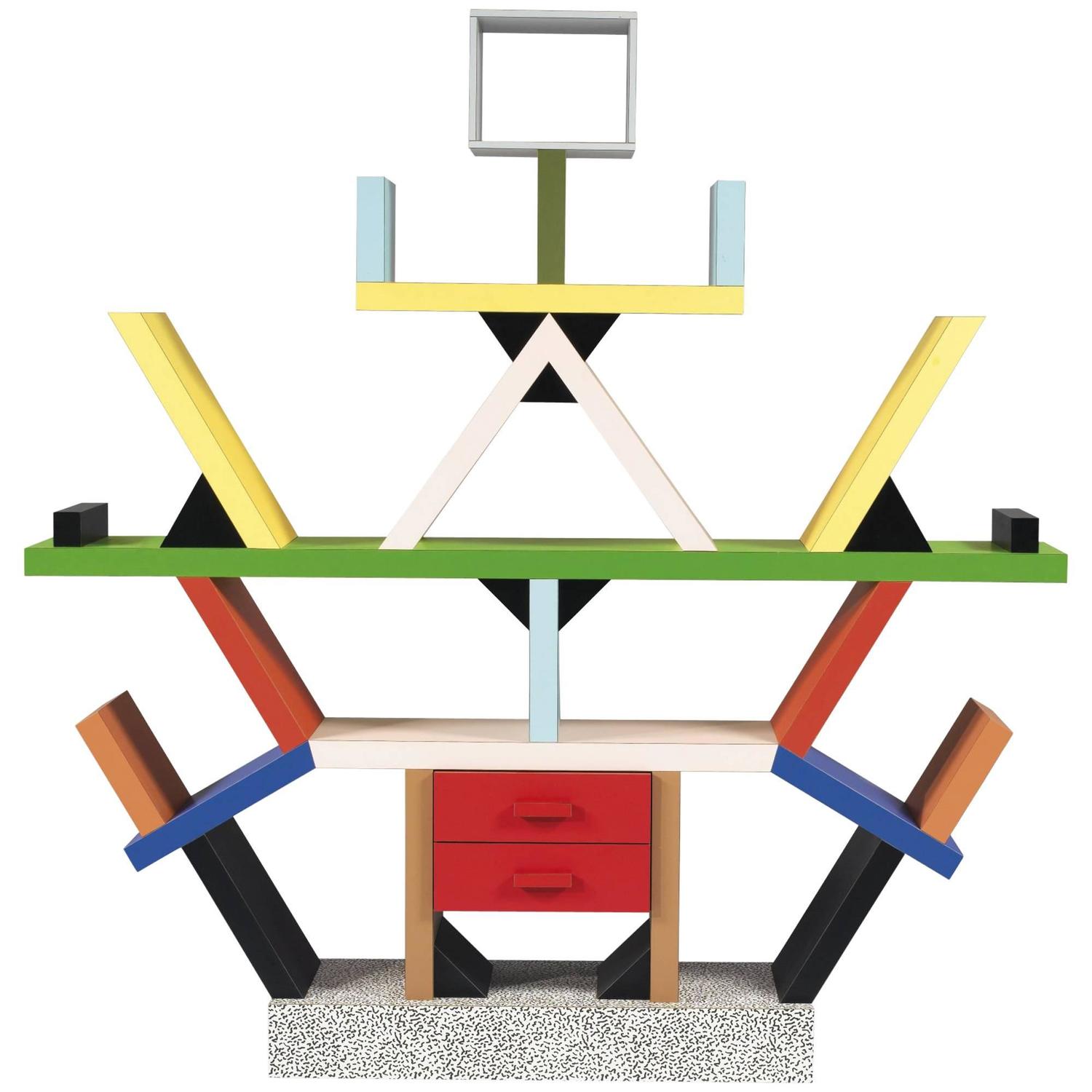
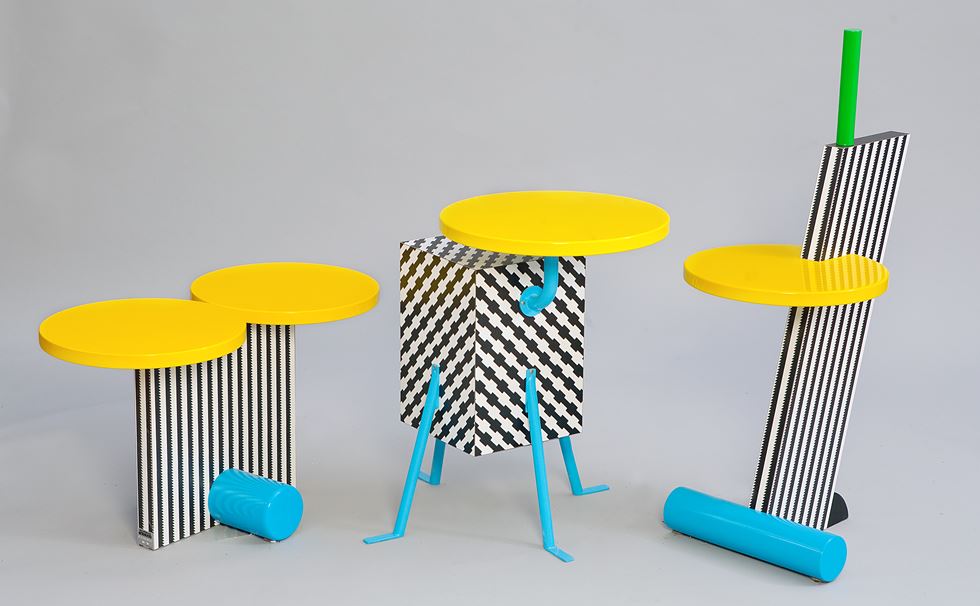
The Memphis Group was an Italian design and architecture group founded in Milan by Ettore Sottsass  in 1981 which designed Post-modern furniture, fabrics, ceramics, glass and metal objects from 1981 to 1987. Memphis was a reaction against the slick, black gloomy design of the 1970’s. In contrast the Memphis Group offered bright, colourful, shocking pieces. The colours they used contrasted the dark blacks and browns of European furniture. 


Related image

They got inspiration from such movements as Art Deco and Pop Art, styles such as the 1950’s Kitsch and futuristic themes. Their concepts were in stark contrast to so called ‘Good Design’. Their main aim was to modernize the Radical Design movement. The group intended to develop a new creative approach to design.
Image result for memphis group

Many of the designs implied to earlier or exotic styles and were based on asymmetrical shapes. 
Image result for memphis group

I think the Memphis group was one of the first movements to open our eyes to new ways. They created something new and colourful out of simple and boring furniture. They made simple things look fun!